
'It may sound like sacrilege, but does it really matter if the global raters downgrade India for fiscal slippage?' asks Tamal Bandyopadhyay.

The perspective planning division might get a new lease of life.

For 2021-22, it projected the economy to clock a growth of 10.6 per cent.

In Q1, India's GDP shrank by a staggering 24 per cent year-on-year amid the imposition of one of the most stringent global nationwide lockdowns.

Retail inflation inched up to 4.48 per cent in October due to an uptick in food prices, government data showed on Friday. The Consumer Price Index (CPI) based inflation was at 4.35 per cent in September and 7.61 per cent in October 2020.
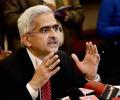
The uncertainty created by the jump in COVID-19 infections and localised lockdowns prompted RBI Governor Shaktikanta Das and other members of the rating setting panel MPC to unanimously vote for status quo in interest rates and an accommodative policy stance to support growth, as per minutes of the meeting released on Thursday. "The need of the hour is to effectively secure the economic recovery underway so that it becomes broad-based and durable," the Governor said during the three-day meeting of the Monetary Policy Committee (MPC) which ended on April 7. The renewed jump in COVID-19 infections in several parts of the country and the associated localised and regional lockdowns add uncertainty to the growth outlook, he observed, as per the minutes of the meeting released by the central bank.

The Reserve Bank's rate-setting panel began its three-day deliberations on Monday to decide the next monetary policy amid expectations that the central bank will maintain status quo on the benchmark interest rate in the backdrop of global scare due to the new coronavirus variant Omicron. Reserve Bank Governor Shaktikanta Das headed six-member Monetary Policy Committee (MPC) is scheduled to announce the policy resolution on Wednesday. If the RBI maintains status quo in policy rates on Wednesday, it would be the ninth consecutive time since the rate remains unchanged.
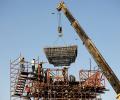
India's economy is unlikely to see double-digit growth and may grow between 8 per cent and 9 per cent this fiscal year (2021-22, or FY22), against the estimated 11.5 per cent, according to leading economists and rating agencies. The downward revision of growth projections to as low as 10 per cent is mostly on account of stringency in restrictions by states, relatively slow vaccination pace, and the possibility of a third wave of the pandemic. However, they say the impact will not be as severe as the first wave, and expect the first quarter to see positive growth.

The Malegam committee on the RBI's capital adequacy had suggested that the RBI must move away from its methodology to calculate the foreign exchange gains to a weighted average cost-based valuation method. Central bank may done away with provisioning requirements, to enable higher transfer of surplus in the 2017-18 fiscal, analysts say.

The key sectors that received the maximum foreign investment during the nine months of the fiscal include services, computer software and hardware, telecommunications, chemicals, and the automobile industry.
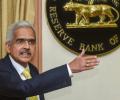
Taking advantage of the RBI's different accounting year, the Centre had started demanding an interim dividend till the time the latter's final balance sheet is prepared (usually in August). To address this anomaly, an expert committee led by former RBI governor Bimal Jalan had recommended aligning the RBI's financial year with that of the government.

The government can issue recapitalisation bonds, or the RBI's huge reserves of over $127 can also be dipped into to help the state-owned bank's recapitalisation needs.

The government in the Budget 2021-22 has made an allocation of Rs 20,000 crore for the capital infusion in the state-owned banks. The capital position of banks would be reviewed in the next quarter, and depending on the requirement, the infusion will be made to meet the regulatory needs. In the current fiscal so far, all 12 public sector banks have posted a profit, which is being ploughed back to bolster the balance sheet of the banks, sources said.
PSBs dominate India's banking system, meaning any failure could jeopardise financial stability, as such, we expect government support will remain forthcoming, said Moody's.
'We have to think of the repercussions if public sector banks are privatised and if they go to foreign hands.'

Billionaire Mukesh Ambani's Reliance Industries Ltd on Friday reported a 22.5 per cent rise in net profit for the quarter ended March on the back of bumper oil refining margins, steady growth in telecom and digital services and strong momentum in the retail business. The oil-to-retail-to-telecom conglomerate's consolidated net profit rose to Rs 16,203 crore in the quarter ended March 31, 2022 from Rs 13,227 crore, the firm said in a statement. Net profit, however, fell 12.6 per cent sequentially -- breaking a six-quarter chain of quarter-on-quarter improvement.

Observing that it is not yet clear to him what the government means by 'Atmanirbhar Bharat', Rajan said if it is about creating an environment for production, then it is a re-branding of the Make in India initiative.

India's jugalbandhi with coal and clean energy is coming unstuck, neither achieving adequate renewable generation nor ensuring sufficient coal-fired power in the quest to become a $5-trillion economy. Six months have elapsed since Prime Minister Narendra Modi announced an ambitious climate agenda for India at COP26 at Glasgow. The net zero emissions target by 2070 is a distant one, but there are nearer-term plans to meet 50 per cent of energy demand with renewables by 2030 by increasing capacity to 450 Gw. A cursory look at the balance sheet of India's climate progress since November reveals ponderous progress towards meeting the renewables target even as the country is scrambling to expand coal-fired generation in the face of a power crisis.
'There are some encouraging signs.' 'Notice that we have not said 7%-plus, we are keeping it at 6% to 6.5%.'

'It is far too early to celebrate the numbers.' 'They are still fairly weak compared to the pre-pandemic level.'
The country's largest private sector lender HDFC Bank on Saturday reported a 23 per cent jump in standalone net profit to Rs 10,055.20 crore for the March quarter, led by growth in loan demand across categories and lower provisioning as bad loans were trimmed. The bank's net profit during the corresponding period of the previous fiscal stood at Rs 8,186.51 crore. "After providing Rs 2,989.5 crore for taxation, the bank earned a net profit of Rs 10,055.20 crore, an increase of 22.8 per cent over the quarter ended March 31, 2021," HDFC Bank said in a regulatory filing.

Tata Steel was the top gainer in the Sensex pack, zooming 7.57 per cent, followed by Sun Pharma, IndusInd Bank, L&T, ITC and HCL Tech.

'We expect the bull run to continue until economic growth continues.'

India's economy, estimated to contract by 6.9 per cent in 2020 due to the coronavirus pandemic, is forecast to record a "stronger recovery" in 2021 and grow by 5 per cent, according to a UN report which said the country's current fiscal year budget points to a shift towards demand-side stimulus, with an uptick in public investment. The report, 'Out of the frying pan ...Into the fire?' published Thursday as an update to the Trade and Development Report 2020 by UN Conference on Trade and Development (UNCTAD) said the global economy is set to grow by 4.7 per cent this year, faster than the 4.3 per cent predicted in September 2020, thanks in part to a stronger recovery in the US, where progress in distributing vaccines and a fresh fiscal stimulus of $1.9 trillion are expected to boost consumer spending.

As per the assessment done by the RBI, the gross NPA of the SBI was 11,932 crore more at Rs 1,84,682 as against Rs 1,72,750 reported by the bank. As a result the bank has to make additional provisioning of Rs 12,036 crore in the balance sheet.
It also recommended that the RBI accounting year (July-June) may be brought in sync with the fiscal year (April to March) from the financial year 2020-21 as it could reduce the need for interim dividend being paid by the central bank.

The sweeping economic sanctions on Russia - the second largest producer of crude oil - following its invasion of Ukraine late last month can cull global and domestic growth along with the added pains of higher inflation and currency depreciation, RBI Deputy Governor Michael Patra has said. And if the war lingers on, it can even lead to deglobalisation and even a recession, he added. The ongoing war has only added a whole new dimension to the outlook, and in fact, a weighty downside, Patra said in a lecture at the industry lobby IMC on Friday evening.

'This is a good time to restructure your portfolio because the sectors and stocks that performed in the last bull market may not perform as much now.'

Enthused by rising potato prices after a prolonged slump, Pradeep Sharma was planning to sow the crop on his 15-acre farm near Agra slightly earlier than usual. The delayed departure of the southwest monsoon also prompted his decision, since the good soil moisture would have saved at least one initial irrigation. But the acute shortage of diammonium phosphate (DAP), a crucial nutrient ahead of the sowing season for potatoes, nipped those hopes in the bud. DAP is the second-most used fertiliser in the country after urea.


Equity benchmarks extended their decline for the fourth straight session on Wednesday, with the Sensex falling 214.85 points after the Reserve Bank raised the key interest rate by 50 basis points. Continuous foreign fund outflows and surging crude oil prices also weighed on markets. The 30-share BSE benchmark dropped 214.85 points or 0.39 per cent to settle at 54,892.49.

S&P Global Ratings has forecast India's economy to shrink by 5 per cent in the current fiscal. It, however, has projected GDP growth to be 8.5 per cent in 2021-22 and 6.5 per cent in 2022-23.
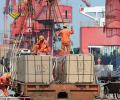
Economists caution that the underlying cause could be an alarming drop in demand -- something that's not good for economic growth.

Many banks' profits will take a hit and a few of them could even end up being in the red because of treasury losses, triggered by a sudden spike in government bond yields in the rising interest rate cycle, notes Tamal Bandyopadhyay.

Fitch Ratings on Monday said it expects a moderately worse sector outlook for Indian banks for the next fiscal beginning April 1 based on muted expectations for new business and revenue generation, and deteriorating asset quality. Fitch believes that the disproportionate shock to India's informal economy and small businesses, coupled with high unemployment and declining private consumption, have yet to fully manifest on bank balance sheets. The rating agency said the impact of the COVID-19 pandemic is likely to pose challenges to Indian banks' improving financial performance once asset-quality risks manifest in the financial year ending March 2022.

The government may soon give the green light to bilateral trade between Russia and India in their national currencies to avoid any trade disruptions, multiple people aware of the matter said. While the Department of Commerce has recommended the proposal, an announcement is likely to be made by the finance ministry after further deliberations between the Department of Economic Affairs and Department of Financial Services. "The finance ministry will take a call on how to peg the two currencies," a senior government official told Business Standard. In the past, the two nations have had rupee-rouble trade, and when such an arrangement is implemented again, it will bypass the sanctions imposed on Russia by the West.

Overall, the credit profiles of players will be supported by healthy balance sheets and liquidity. Prudence in capital and development expenditure, efficient working-capital management, and recent equity raising will help sustain credit metrics in FY22.
The Reserve Bank's growth projection for next financial year is lower than 8-8.5 per cent projected by the finance ministry in the recent Economic Survey which was tabled in Parliament on January 31. Unveiling the bi-monthly policy, RBI governor Shaktikanta Das said, "Recovery in domestic economic activity is yet to be broad-based, as private consumption and contact-intensive services remain below pre-pandemic levels."

Retail inflation fell to a five-month low of 4.35 per cent in September from 7.27 per cent in the year-ago period as prices of vegetables and other items declined, according to government data released on Tuesday. The moderation in Consumer Price Index-based inflation is in line with the assessment of Reserve Bank Governor Shaktikanta Das who recently projected substantial softening of retail inflation. The CPI inflation was at 5.3 per cent in August and at 7.27 per cent in September 2020.

Fitch Ratings has revised India's GDP forecast to minus 9.4 per cent in the current fiscal year from a previously projected contraction of 10.5 per cent after the economy staged a sharper rebound in the second quarter. In its Global Economic Outlook, Fitch said the coronavirus-induced recession inflicted severe economic scarring and the country needs to repair balance sheets and increase caution about long-term planning. "We now expect GDP to contract 9.4 per cent in the fiscal year to end March 2021 (plus 1.1 percentage point) followed by plus 11 per cent growth (unchanged) and plus 6.3 per cent growth in the following years," the rating agency said.
